

Cursor
AI code editor for pair programming, refactoring, and codebase navigation.
Developer toolsFreemium

Agentic IDE from AWS that turns prompts into specs, design docs and tasks before writing code, with hooks and MCP support.
Overview
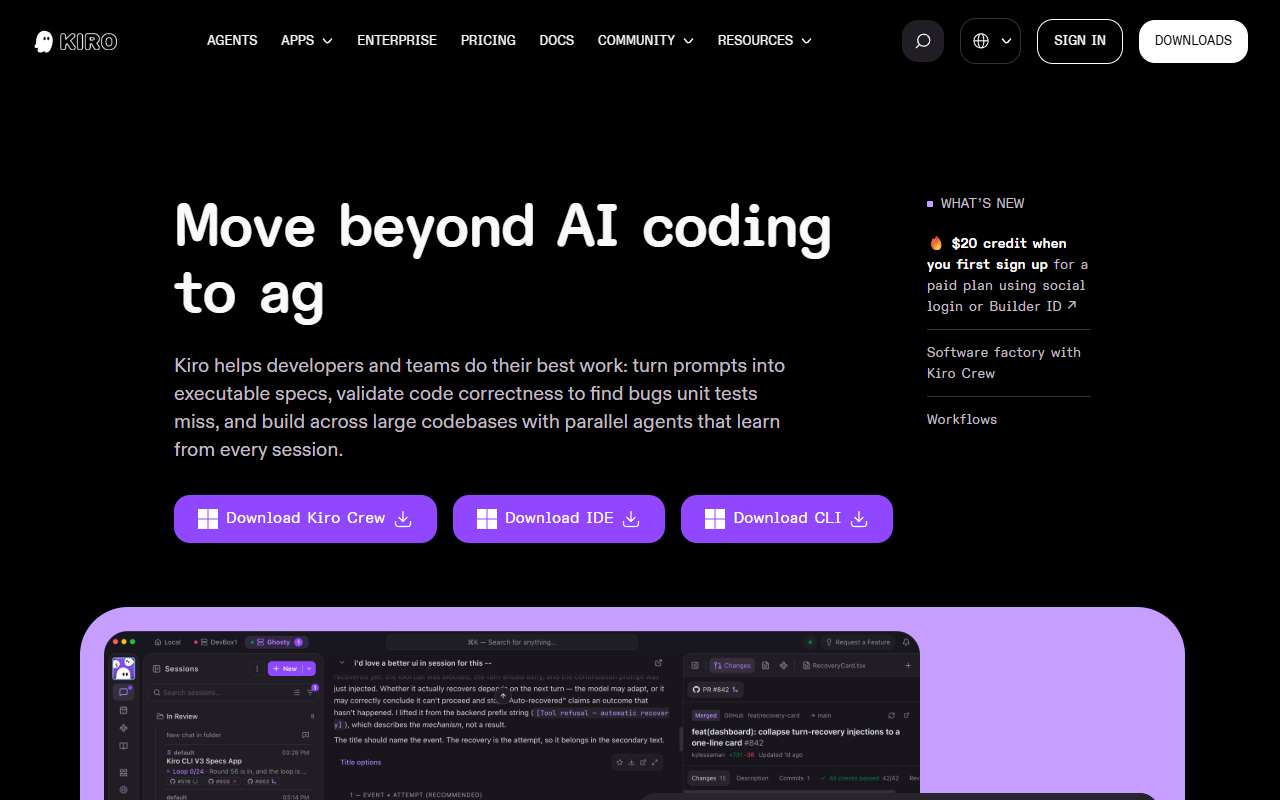
Kiro is an AI-first IDE from Amazon Web Services built on a VS Code base. Its distinctive feature is spec-driven development: a prompt is first turned into requirements, a design document and a task list that the developer edits, and the agent then implements tasks one at a time. Agent hooks run automatically on events such as saving a file, so the agent can update tests or documentation in the background. It supports MCP servers for connecting to databases, AWS services and internal tools, and steering files let teams set project conventions. Models include Claude Sonnet and Opus plus open-weight options, billed through monthly credits. Small product teams use it when they want more structure than a chat assistant provides, especially for greenfield features that benefit from a written spec. A pilot is one developer on the free tier building a small feature end to end with specs. Caveat: credit multipliers vary by model, so Opus usage drains a plan about twice as fast as Sonnet, and the credit allowance on Free is small.
Software engineering agents
Implementing a feature from a written spec with task-by-task execution and review.
2-4 weeks to value · Medium effort · Medium risk · low
Code generation
Generating code that follows steering files and project conventions.
1-3 weeks to value · Medium effort · Medium risk · low
Verdict
Pays back on
Compare
AI code editor for pair programming, refactoring, and codebase navigation.
AI coding assistant for suggestions, chat, and developer workflows.

Agentic coding environment for repo-aware development, edits, terminal work, and codebase navigation.

Open-source autonomous coding agent for VS Code and the terminal that works with any model provider through your own API keys.
Not paid placement. Verified means the listing passed our current editorial checks; it does not guarantee fit for every workflow.